

Saleh Abdullah Al-Abdulhadi ( Department of Child Health, Royal Aberdeen Children\'s Hospital, University of Aberdeen, Medical School, Westburn Road, Aberdeen, Scotland, United Kingdom. )
Al-Rabia M W ( Department of Hematology and Immunology, College of Medicine, Umm Al-Qura University, Makkah, Kingdom of Saudi Arabia. )
March 2011, Volume 61, Issue 3
Original Article

Abstract
Objective: To examine the possible associations between CCR5D32 and asthma and related phenotypes in high-risk families.
Methods: A total of 154 families (453 individuals), with at least two affected children with physician-diagnosed asthma (PDA) and atopy defined as one or more skin prick test to common inhaled allergen (SPT wheal > 3mm), were studied. Samples were genotyped using PCR assay and tested for possible associations by TDT and PDT and case control analyses.
Results: Overall allelic frequency for CCR5D32 was 26.1%, and both TDT and PDT demonstrated similar non-significant associations (p=0.123) and (p=0.088). Analysis by the clinical categories of non atopic and atopic asthma and presence or absence of atopy without asthma failed to identify any significant associations. However there were strong associations of the mutant allele with the phenotypes of negative SPT, PC 20 less than 8mg/ml, baseline FEV1 greater than the population median (83.5% predicted) and serum IgE less than 100 IU/l for child probands but only for negative SPT in unrelated parents.
Conclusion: Non-significant association was seen with family based association tests (FBATs). The strong associations with the asthma related phenotypes in child probands support previous observations that CCR5 is in linkage disequilibrium with CCR2 or CCR3.
Keywords: CCR5, polymorphism, Asthma, Children, Adult, PDT, Association (JPMA 61:267; 2011).
Introduction
The pathogenesis of asthma involves a complex and heterogeneous genetic component interacting with several environmental factors. Among the chemokines receptors and their ligands macrophage inflammatory protein (MIP) 1a, MIP-b and regulated on activation normal T cells expressed and secreted (RANTES) bind to the chemokine receptor-5 (CCR5) that is expressed on T cells, monocytes, and macrophages.1,2
A frame-shift mutation caused by a 32-base pair deletion at position 32 (CCR5D32) results in a truncated and inactive protein (Figure-1).3,4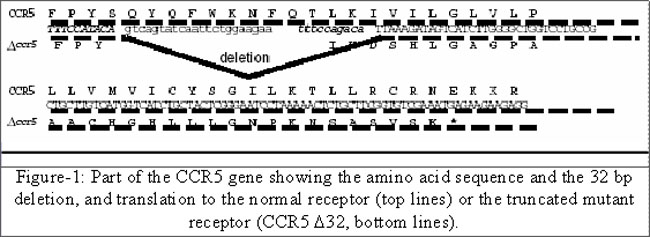
It has been confirmed that individuals heterozygous for CCR5 D32 exhibit a delay in progression from HIV infection to the full expression of Acquired Immunodeficiency syndrome (AIDS) that T cells expressing a 5 to 10-fold less CCR5 than wild-type cells are resistant to invasion by HIV and that CD4+ T cells in such individuals produce approximately 20-fold more RANTES than wild-type cells.5-7 In addition to these associations with HIV disease Alam et al8 suggested that C-C chemokines may play an important role in allergic inflammation. It was therefore hypothesized that the CCR5 D32 polymorphism may provide a degree of asthma protection in childhood from families at high-risk of asthma and atopy. In this regard a previous case-control study in Aberdeen found a lower than expected frequency of D32 allele in Caucasian asthmatic children when compared with unrelated, non-asthmatic controls (p<0.002).9 Subsequent reports have not been able to confirm this association.10,11 However case-control studies are subject to false positive associations due to population stratification. It was therefore decided to assess the possible relevance of the D32 allele by performing family transmission analyses including the transmission disequilibrium (TDT) and pedigree transmission (PDT) tests that are not influenced by stratification.12-14 TDT detects the allelic association with disease by assuming the null hypothesis that heterozygous parents have an equal (50%) chance under Mendelian inheritance rules of transmitting one of the two-marker alleles to their offspring with the disease in question. PDT uses the same principles but has several advantages not least that all available parent child trios within a family pedigree can be used. The association of the CCR5 D32 allele with asthma was therefore tested in nuclear families comprising at least two or more asthmatic children using both transmission and association analyses.
Two studies reported that the frequency of the D32 allele exhibited a gradient across Europe with higher frequencies in the north than in the south of Europe but with a mean of approximately 9% across Europe and 11.1% in UK.15,16
This study was planned to see the possible association between CCR5 D32 and asthma and related phenol-type in high risk families.
Subjects and Methods
Population characteristics have been described elsewhere.17 Briefly we identified 154 unrelated nuclear families (598 individuals including children and parents) from our Local Grampian population in 2001, containing at least 2 children and young adults between 8-24 years, the majority of whom had a physician diagnosis of asthma (PDA) and current symptoms (wheeze in the past 12 months). All 154 families were white caucasian and were drawn from a population in which the UK 2001 census showed that 84% were born in Scotland, 12% in other parts of the UK and only 4% out of the UK.
Atopy was defined as the presence of at least one positive Skin prick test (SPT) with a wheal size of 3 mm among 5 inhalant allergens (cat, dog, house dust mite, grass and alternaria) referenced to negative control and serum IgE categorised as above or below 100 IU/ml. Bronchial hyperresponsiveness (BHR) was assessed by methacholine challenge13 only omitting this test in subjects with a baseline FEV1 below 70% predicted. A positive response and hence significant responsiveness was defined as a fall in baseline FEV1 of 20% or more at a dose of less than 8mg/ml of inhaled methacholine. Predicted FEV1 values for adults > 18 years were from Crapo et al 198114 and for children < 18 years from Wang et al 1993.15 Baseline FEV1 was categorized as above or below the median whole population percentage predicted value. DNA was isolated from EDTA anticoagulated whole blood using the phenol-chloroform method.
This project was funded and supported by the ministry of higher education in Saudi Arabia for education purposes. This support included manpower and financial expense for population recruitment and bench work research. Ethical approval for all studies was awarded by the Grampian Research Ethics Committee to the department of child health which was facilitating the work flow.
Statistical Analyses:
Family-based association tests (FBATs):
In order to assess familial transmission of the D32 allele, the pedigree disequilibrium test (PDT) was used in addition to TDT as this test has advantages over the classical transmission/disequilibrium test (TDT).13,14 PDT treats the triads (parent-child trios) as the independent entities whereas TDT treats the contribution from heterozygous parents to an affected child as independent13,14 and is therefore open to confounding by phenocopies or heterogeneity. The PDT test is based on markers with two alleles M1 (the common allele) and M2 (the affected allele), and pairs of these alleles (M1M2) or (M2M2) transmitted from heterozygote parents to an affected child, and pair of alleles (M1M1) not transmitted. The analysis was performed as in any family-based test by the McNemar test.12
Families were identified with at least one parent heterozygote for the mutant allele. The test was also applied separately for PDA, BHR, percentage predicted FEV-1 below the population median, atopy defined as a least one skin prick test (SPT) at least 3mm greater than negative control, and serum -IgE greater than 120 iu/ml.
Case-control Study:
Out of the 598 available subjects, 453 contributed to the case control study, as participants had to be unrelated to each other. None of the parents were related thus providing 210 individuals including 114 cases and 96 controls from the105 families identified through child sib pairs and 98 individuals, all cases, from the 49 families identified from the population followed from childhood, a grand total of 308 subjects. For the case control study in the younger generation only the first identified child within each of the 105 sib pair families and the 49 families based on long term follow up of their parents were included, a grand total of 154 younger generation subjects.
Allele frequencies for the wild type (wt) and the mutant allele (D32) were compared in all diagnostic categories, atopic asthma, atopy without asthma and non atopic asthma all referenced to non atopic non asthmatic parent and child generation controls.
Genotype and allele frequencies among the different groups were tested by Chi-square and OR\\\'s and 95% CI\\\'s with adjustment for age and gender. As asthma and atopy are often co-associated we performed univariate analyses for the 3 "disease" categories of atopic asthma, atopy without asthma and non atopic asthma.
Results
Of the 154 unrelated children probands (age 8-24 years [median 14 years]) 150 had complete data as did 303 of 308 parents (age 34-61 years [median 43]).
Family-based association tests (FBATs):
Only 45 families contained at least one heterozygous parent and were therefore eligible for TDT and PDT analyses. Table-1 displays the results of TDT and PDT analyses for both the CCR5 wild-type (wt) allele and the mutant D32 allele, which were transmitted from heterozygous (D32/wt) parents to asthmatic and/or atopic offspring. In order to confirm the hypothesis that D32 polymorphism might protect against asthma in childhood,9 a lower allele frequency of 32 would be expected in children affected with asthma compared with the wild-type allele. However as can be seen TDT did not achieve significance for transmission of the two alleles with disease or absence of disease (p=0.123), and only a marginal effect with PDT (p=0.088) (Table-1). ).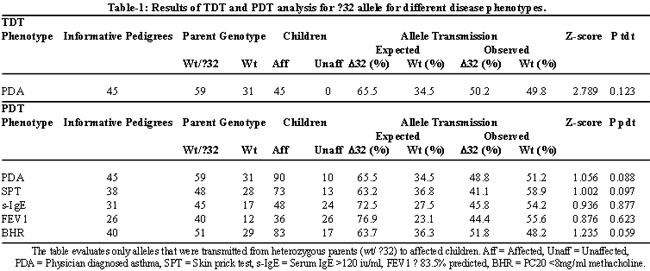
Case-control Study:
The overall allelic frequency of D32 polymorphism in this population (children and parents) was 26.1% and was in Hardy-Weinburg equilibrium and the lack of such equilibrium in some of the population subgroups was probably due to the small size of some of these subgroups. In the case-control study cross tabulation of genotype frequencies for the wt and D32 revealed no significant differences between diagnostic categories in both unrelated parents and unrelated children although there appeared to be a slight excess of individuals homozygous and heterozygous for D32 in the not asthmatic non atopic category (Table-2 a,b and Figure-2).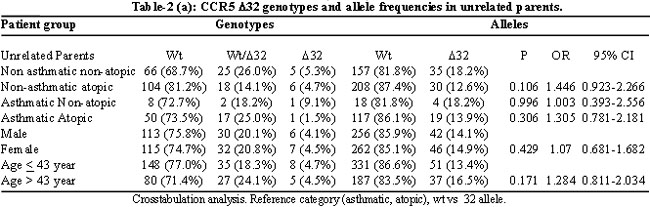
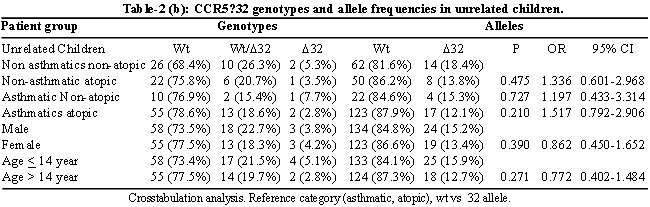
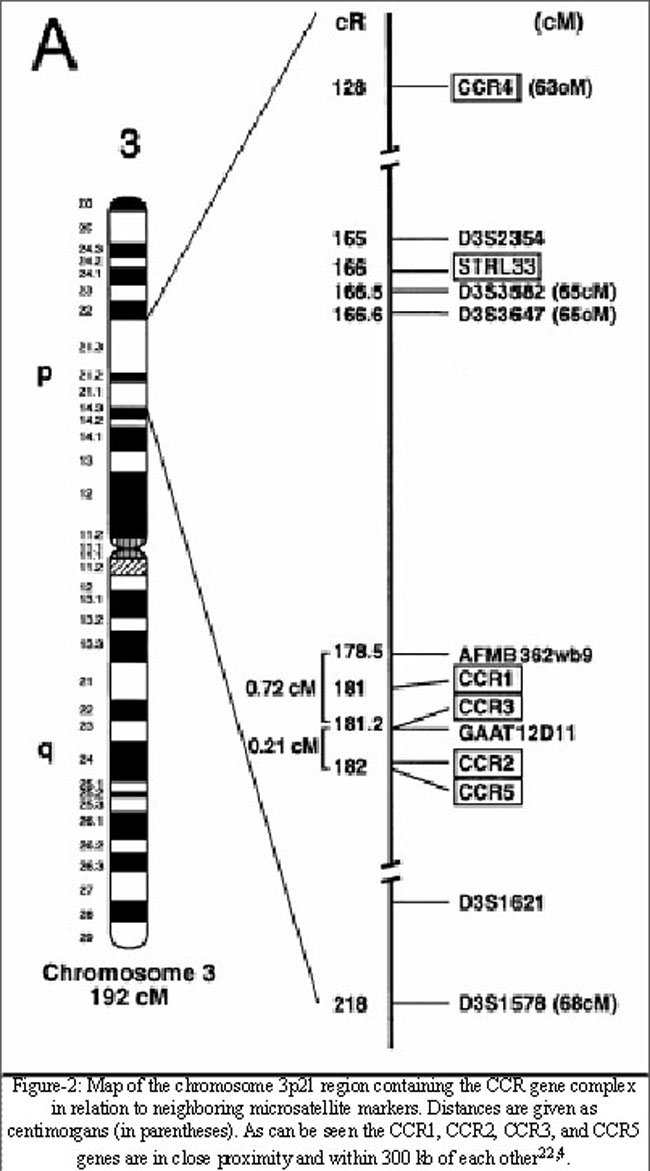
Odds ratios were also corrected for gender and age in order to see whether the association was modified by these factors. This analysis revealed non-significant effects for age or gender.
However when asthma related phenotypes were assessed it became apparent that there were significant associations with the mutant allele. As can be seen from Table-3.3 and in unrelated parents a significant association was observed between the D32 mutation and the absence of atopy as defined by negative SPT (p=0.001). In unrelated children on the other hand (n=150; aged 8-24 years) highly significant associations were found with negative SPT, "normal" s-IgE level, FEV1 above the population median and negative BHR (Table 3 a,b).
.jpg)
Discussion
The transmission disequilibrium test (TDT) found no significant difference between 32 and wt alleles. However the limited numbers of eligible parent-child trios for TDT (n= 45) reflects the restrictive nature of this analysis to one child/ parent trio per family. The PDT analysis however allowed the inclusion of all siblings from informative families and the fact that this increased the eligible trios to 100 suggested that this latter method would provide greater power in assessing the relevance of candidate polymorphisms. However in this case and with the D32 CCR5 candidates both TDT and PDT failed to achieve significance. Mitchell et al,10 applied TDT to 229 randomly selected nuclear families from Australia, and 86 nuclear families from Oxfordshire, UK and also found no evidence for preferential transmission of the D32 CCR5 candidate to asymptomatic children. They established that heterozygous (wt/D32) parents in each independent group and in the combined group transmitted approximately equal numbers of each allele to asthmatic children (TDT 2 =0.30, p<0.29 for the combined data). McGinnis et al11 also reported non-significant associations between the D32 allele and asthma in English families (n= 43 nuclear families, TDT 2 = 1.35, P < 0.125) and in German families (n= 28 nuclear families, TDT 2 = 0.016, P < 0.45)(table 4). McGinnis et al11 considered that this negative result could be the consequence of random population variation, or the selection of highly affected families. Most of the parents in their population were asthmatic and had multiple asthmatic children. An alternative explanation could be that the families in the present population did not fit a single genetic model and could be exhibiting either fully or partial penetrant (dominant or recessive) inheritance which conflict with the principle of family-based assessments using simple Mendelian inheritance models.
Distribution of the CCR5 D32 deletion has been found to vary considerably in British populations from 11.1%15 to 22.7%.9 Distribution in the present and selected family population was 12.5%. Variable prevalence of the 32 allele has been found in different populations world-wide and are likely to be influenced by different genetic background, environment factors, and population structure.17
Unrelated parents and children in the present nuclear family collection were eligible for case-control analyses and the negative findings with respect to the 3 diagnostic categories of atopic asthma, non atopic asthma and atopy without asthma, could not support or refute the hypothesis that D32 allele may only protect against pre-pubertal asthma as reported by Srivastava et al.18 This is because the majority of the "children" in the present study were adolescents or young adults. Further study in larger numbers of children across the child/ early adult divide would be required to confirm or refute this age specific effect. McGinnis et al.11 also compared D32 allele frequencies between their unrelated asthmatic and non-asthmatic parents, looking to confirm any association with asthma reported from mainly prepubertal children in the north east of Scotland by Hall et al.9 McGinnis et al11 observed a significantly lower prevalence of the D32 allele (p=0.0083) within their asthmatic group (n=46) compared with asymptomatic controls (n=106). However they had insufficient data to undertake analysis of the subtypes of asthma and of atopy.
The largely negative findings of Mitchell et al10 and McGinnis et al11 in the face of suggestions of a possible association in the data from McGinnis et al11 together with the trend towards a higher prevalence of the mutant allele in asymptomatic non atopic individuals could be a chance finding or due to other complicating factors. What has been described as "locus heterogeneity" occurs if more than one genetic locus on a chromosome influences disease susceptibility. In the case of asthma and related phenotypes this could be due to the contribution of other chemokine receptor genes CCR1, CCR2,19 and CCR3 (data submited for publication) that lie within 300 kb of each other on chromosome 3p21 (Figure-3).18).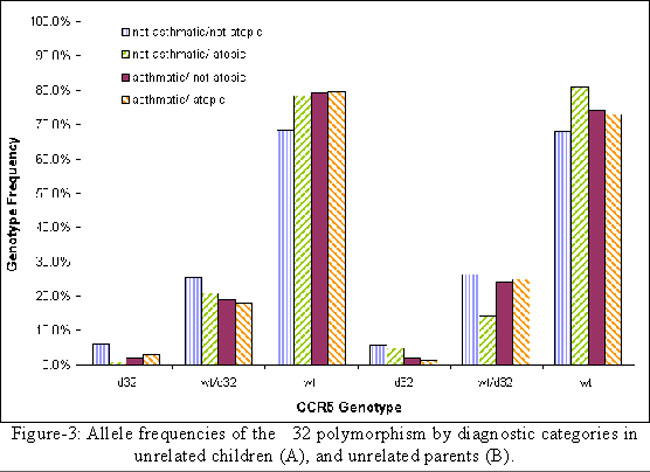
"Polygenic" effects could also be relevant where more than one genotype occurs at more than one locus as seen for the chemokine ligand RANTES on chromosome 17q11.2-q12.20,21 The different outcomes between the present Grampian population, and the English population studied by McGinnis et al,11 and from any other populations could also be explained by their different genetic backgrounds and environmental exposures. Furthermore high-risk families, although ideal for the study of familial transmission, may not be the best population in which to study gene phenotype associations as they are selected on the basis of a high prevalence of the disease or phenotype in question.
As non significant transmission was observed with both TDT and PDT, albeit with a trend in the latter case, the frequencies of the D32 allele with atopic and non atopic asthma were also compared. This analysis showed a non significant positive trend towards a higher allelic frequencies in asymptomatic non atopic in both child probands and their parents that was similar to that found by McGinnis et al11 in their adult population. However the strong associations of the mutant allele with absence of asthma and atopy associated phenotypes (Table-3.3) in child probands and the absence of such associations with then exception of atopy as defined by negative SPT would support the possible relevance of the allele in children and adolescents as previously suggested by Srivastava et al.18
Although errors due to small population samples and to different genetic background and environmental factors could explain the observed differences between the present and previous reports the trends observed and the associations with the intermediate phenotypes of atopy, BHR and baseline lung function suggest that the CCR5 D32 polymorphism. Other reported studies for chemokine receptor genes CCR219 that confirm significant association with protection against asthma and/or CCR3 (data submitted for publication) may contribute in linkage disequilibrium and CCR5 D32 with to the absent or the expression of asthma.
Acknowledgements
Ministry of Higher Education, Kingdom of Saudi Arabia funded this study for bench work research, data collection, family collection, and clinical assessment. During the postgraduate study period I (Dr Saleh Abdullah) was connected to University of Aberdeen, Royal Aberdeen Children Hospital to accomplish this project. GlaxoSmithKline Research and development and the Scottish Heart Chest and Stroke Association supported the family collection. We thank Julie Black and Joanna Gordon from Department of Child, Royal Aberdeen Children\\\'s Hospital, University of Aberdeen, UK, for valuable assistance in family recruitment. We thank Prof. Peter J. Helms Department Head of Child Health and Dr. Gorge Christie for their cooperation in the clinical assessment.
References
1.Neote K, DiGregorio D, Mak, JY, Horuk, R, Shchall, TJ. Molecular cloning, functional expression, and signaling characteristics of a C-C chemokine receptor. Cell 1993; 72: 415-25.
2.Ponath PD, Qin S, Post TW. Molecular cloning and characterization of human eotaxin receptor expression selectively on eosinophils. Journal of Experimental Medicine 1996; 183: 2437-48.
3.Liu R, Paxton WA, Choe S, Ceradini D, Martin SR, Horuk R, et al. Homozygous defect in HIV-1 coreceptor accounts for resistance of some multiply-exposed individuals to HIV-1 infection. Cell 1996; 86: 367-77.
4.Samson M, Libert F, Doranz BJ, Rucker J, Liesnard C, Farber CM, et al. Resistance to HIV-1 infection in caucasian individuals bearing mutant alleles of the CCR-5 chemokine receptor gene. Nature 1996; 382: 722-5.
5.Huang Y, Paxton WA, Wolinsky SM, Neumann AU, Zhang L, He T, et al. The role of a mutant CCR5 allele in HIV-1 transmission and disease progression. Nature Medicine 1996; 2:1240-1243.
6.Dean M, Carrington M, Winkler C, Huttley GA, Smith MW, Allikmets R, et al. Genetic restriction of HIV-1 infection and progression to AIDS by a deletion allele of the CKR5 structural gene. Hemophilia Growth and Development Study, Multicenter AIDS Cohort Study, Multicenter Hemophilia Cohort Study, San Francisco City Cohort, ALIVE Study. Science 1996; 273:1856-62.
7.Dragic T, Litwin V, Allaway GP, Martin SR, Huang Y, Nagashima KA, et al. HIV-1 entry into CD4+ cells is mediated by the chemokine receptor CC-CKR-5. Nature 1996; 381: 667-73.
8.Alam R. Chemokines in allergic inflammation. Journal of Allergy and Clinical Immunology 1997; 99: 273-7.
9.Hall IP, Wheatley A, Christie G, McDougall C, Hubbard R, Helms PJ. Association of CCR5 delta32 with reduced risk of asthma. Lancet 1999; 354: 1264-5.
10.Mitchell TJ, Walley AJ, Pease JE, Venables PJ, Wiltshire S, Williams TJ, et al. Delta 32 deletion of CCR5 gene and association with asthma or atopy. Lancet 2000; 356: 1491-2.
11.McGinnis R, Child F, Clayton S, Davies S, Lenney W, Illig T, et al. Further support for the association of CCR5 allelic variants with asthma susceptibility. European Journal of Immunogenetics 2002; 29: 525-8.
12.Spielman RS, Ewens WJ. The TDT and other family-based tests for linkage disequilibrium and association. American Journal of Human Genetics 1996; 59: 983-9.
13.Martin ER, Monks SA, Warren LL, Kaplan NL.. A test for linkage and association in general pedigrees: the pedigree disequilibrium test. American Journal of Medical Genetics 2000; 64: 146-54.
14.Martin ER, Bass MP, Kaplan NL. Correcting for Potential Bias in the Pedigree Disequilibrium Test. American Journal of Medical Genetics 2001; 68: 1065-7.
15.Lucotte G. Distribution of the CCR5 gene 32-Basepair Deletion in West Europe. A hypothesis About the possible dispersion of the mutation by the Vikings in Historical times. Human Immunology 2001; 62: 933-6.
16.Stephens JC, Reich DE, Goldstein DB, Shin HD, Smith MW, Carrington M, et al. Dating the origin of the CCR5-Delta32 AIDS-resistance allele by the coalescence of haplotypes. American Journal of Human Genetics 1998; 62: 1507-15.
17.Fryer AA, Spiteri MA, Bianco A, Hepple M, Jones PW, Stange RC, et al. The -403 G-->A promoter polymorphism in the RANTES gene is associated with atopy and asthma. Genes and Immunity 2000; 1: 509-14.
18.Srivastava P, Helms PJ, Stewart D, Main M, Russell G. Association of CCR5Delta32 with reduced risk of childhood but not adult asthma. Thorax 2003; 58: 222-6.
19.Al-Abdulhadi SA, Al-Rabia MW. Association and preferential transmission of the CCR2V64I polymorphism with absence of asthma in high-risk families. Saudi Medical J 2008; 29: 1711-8.
20.Nickel R, Beck LA, Stellato C, Schleimer RP. Chemokines and allergic disease. Journal of Allergy and Clinical Immunology 1999; 104: 723-42.
21.Raport CJ, Gosling J, Schweickart VL, Gray PW, Charo IF. Molecular cloning and functional characterization of a novel human CC chemokine receptor (CCR5) for RANTES, MIP-1beta, and MIP-1alpha. J Biol Chem 1996; 271: 17161-6.
Journal of the Pakistan Medical Association has agreed to receive and publish manuscripts in accordance with the principles of the following committees:


