

Dr. Mohammad Abdul Haq ( M.B.B.S., B.D.S. (Pb.), L.D. S.R.C.S. (Ed), F.D.S.R.C.S. (Eng.), F.LC.D. )
April 1986, Volume 36, Issue 4
Case Reports

Dr. Mohammad Abdul Haq, senior-most dental surgeon of Pakistan, first Pakistani Principal and Professor of de Montmorency College of Dentistry and Mpdical Superintendent Of Panjab Dental Hospital, Lahore, Dean of the Dental Faculty and Member of the Senate of the Panjab University,Lahore, died on 22nd May3 1985 at his son’s home in Karachi after a long illness endured with great faith, courage and cheerful: ness. He was 87.
Mohammad Abdul Haq was born in 1898, educated at Lahore Government College, King Edward Medical College and de Montmorency College of Dentistry, graduating MBBS in 1922 and BDS in 1936. Soon after graduating MBBS Dr. Haq entered the medical life of the city of Lahore and in a short time established a successful medical practice which he continued for almost 16 long years. His patients came from all walks of life, rich and poor, muslims and non-muslims. They revered him for his outstanding qualities of head and heart, sound knowledge and pleasant bed-side manners which were based on his firm religious faith and which he practised unobtrusively in his daily life. During this period he also worked part-time as Health Officer incharge of the two Infectious Diseases Hospitals of the Lahore Municipality. At the same time he was an active member of the Indian Medical Association, being for several years member of executive committee and vice president of its Lahore branch.
The de Montmorency Dental College at Lahore was the first institution of its kind started by the Government in pre-partition India. At that time there was great dearth of qualified dentists in the province and there was none among the muslims. Realizing the situation and the future prospects in the dental profession, Dr. Haq became interested in dentistry and enrolled himself in the first batch of students who graduated BDS in 1936. With his University Roll Number 1, he was the first graduate to receive the degree of BDS from the Panjab University. This change in profession was the turning point in his future life and career. By quitting a flourishing medical practice Dr. Haq had embarked on a new career in dentistry
In 1937 he left for U.K. for higher studies in dentistry and returned the following year having qualified LDSRCS from Edinburgh. Soon after he wound-up his well established medical practice for good and started full-fledged dental practice which he built slowly and steadily against tough competition with well established non-muslim dentists. This change in profession was a great loss to his -medical clientele who were deprived of the services of a good family doctor.
In 1939 Dr. Haq joined de Montmorency College and Dental Hospital, Lahore as Demonstrator and remained associated with it till his retirement in 1953 as the first Pakistani Principal of the College, Medical Superintendent of the Dental Hospital, Dean of the Dental Faculty and Member of the Senate of the Panjab University.
His experience proved of immense value at the time of partition in 1947 when he was called upon as the Acting Principal and Medical Superintendent to run the institution in the absence of the predominantly non-muslim staff who had fled the country. In the absence of trained and qualified staff this indeed was a Herculean task. None the less Dr. Haq rose to the occasion and acquiring the services of young graduates, his former students, was not only able to run the institution efficiently but was also able to restore its lost reputation. The services thus rendered were duly rewarded when in 1949, on the recommendation of Prof. Bradlaw (later Lord Bradlaw,) who inspected the institution on behalf of the Dental Council of Great Britain, de Montmorency College and Dental Hospital were recognized and Dr. Haq was elected a Fellow of the newly created Dental Faculty of Royal College of’ Surgeons of England. Dr. Haq was richly endowed with all the qualities of a good teacher, a skilled surgeon and an able administrator and he used them to the full. He had the knack of maintaining cordial relations with all concerned (thanks to Dale Carnegie for his “How to Win Friends & Influence People) which he was fond of, his relations with the student body of the college were excellent; they had never enjoyed so much respect and privilege as they did during his principalship. His up-to-date knowledge of the subjects he taught, his devotion to duty and scrupulous conduct were an example to his innumerable students whom he taught and trained. On his retirement from the college and hospital in 1953 the students missed in him not only a good teacher but also a kind and understanding friend who was never hesitant to plead for their just cause. In his message to the Old
Graduates Association of the College, he himself being the oldest graduate alive at that time, he said that life was a continuous process in which one should live and let live with mutual love, respect and good-will for fellow beings. One should learn from the mistakes of the past and live in the present working hard without ill will to any to build a bright and prosperous future and that there was no pursuit better than learning for knowledge.
On retirement from the college in 1953, Dr. Haq continued his dental practice full time successfully. Over the years his surgical skill and judgement had matured and was one of the best available in the country. Those who have had the experience of being his patients remember him for his ‘light’ and ‘tender’ hand. He possessed the most equable character who was never knoyvn to panic in any emergency. He possessed immense energy, was devoid of professional jealousy and all his life served the profession with devotion and integrity.
Married in 1925, Dr. Haq rejoiced in his family life of 60 long years with devoted wife and 8 loving children with whom he had ideal relationship. After retirement from the dental college in 1953 he continued his dental practice till 1976 when he suffered from a mild attack of stroke. Apparently he recovered from it completely but never fully in zest and vigour. He wound up his dental practice and residence at Lahore and came over to Karachi to live a semi-retired life with his eldest son, Dr. Ihsanul Haque, FRCP, a consultant neurologist
Few of his old friends and colleagues have survived him. Those who have will remember him an interesting and stimulating personality, devoid of hypocrisy and pleasant to get along with. Brisk in step but gentle in manners he was gifted with a delightful sense of subtle humour and quick wit. He always enjoyed and praised every thing good in life not to say of good joke, food and company.
The sympathy shown by every one of his well-wishers in Karachi and Lahore during his illness and the spontaneous grief at his sad demise bear witness to the character of the man and have been of great comfort and solace to his wife and children. In his demise a greatly loved character has gone and the loss is enormous. Our sympathy is extended to the bereaved family whose grief we share in the loss of a truly good man. May his soul rest in eternal peace and receive Almighty GOD’s choicest favours and rewards Amen.
Prof. M. Haque, Anklesaria Nursing Home, Garden Road, Karachi-3 ,(Pakistan).
SELECTED ABSTRACTS
Isolated Coronary Artery Bypass Grafting in Patieents Seventy Years of Age and Late Results. Mark S. Hochberg, Frederick H. Levine, Willard M. Daggett and others. J. Thorac. Cardiovasc. Surg., 1982, 84: 219-223.
SEVENTY-FIVE PATIENTS, 70 years of age or older, who underwent coronary revascularization are presented. There were four indications for operation: chronic stable angina, unstable angina; evolving myocardial infarction, and cardiogenic shock. These patients were matched by computer with a group of 75 patients less than 70 years old, and the results were compared. Thus, age was the only significant difference between the two groups.
After operation, the mortality associated with the first group of patients was higher than the mortality associated with the second group of patients, 12 versus 4 per cent, but this difference was not statistically significant, p=0.06. Complications were not significantly different between the two groups, but the length of hospitalization was greater for the group of patients who were more than 70 years old, p <0.05.
The results of this study confirm the safe use of coronary artery bypass grafting in patients who are at least 70 years old and have coronary artery disease. The accrued results are satisfactory, and complete rehabilitation can be expected. The age of these patients cannot be considered a contraindication to coronary revascularization.
Giacomo A. DeL aria
Thoracic Aortic Rupture in Patients with Multisystem Injuries.Stephen Hanschen, Norman J. Snow and J. David Richardson..South Med. .J. 1982, 75 : 653-65 6.
HIGH MORTALITY and morbidity are associated with trauma to multiple systems. In an attempt to discover logical priorities and principles related to the care of such patients, the authors evaluated the association between these injuries and thoracic aortic injury. During the five year period, 19 patients with ruptured thoracic aortas were evaluated. Average transportation time to the hospital was 2.8 hours, while an average of 5.4 hours was spent at the hospital prior to operation.
A widened mediastinum was the most obvious sign and almost universally led to the diagnosis. Associated roentgenographic findings and history were of little diagnostic help. Hypotension was present in 1 7 patients. Three patients died of exsanguinating hemorrhage before operation, two patients had thoracotomies only, three had thoracotomy and orthopedic procedures and 11 required thoracotomy and celiotomy. Over-all, nine patients survived.
An average of 4.8 systems were injured in each patient. Injury to the central nervous system and fractures of the extremity were most common. injuries to the liver, spleen, pancreas, kidney, intestine, diaphragm, heart and lungs were encountered, and their presence or absence did not differ in survivors and nonsurvivors. Survival was associated with frequent complications. Postoperative hypertension, paresis or paralysis, renal failure and sepsis all occurred. Fatalities were caused by hemorrhage, cardiac injury sepsis and renal failure, although they appeared to be unrelated to the method of injury, the transportation time and the age of the patient.
Results of most series have shown that time to operation should be as short as possible. The diagnosis is suggested by a widened mediastinum on standard roentgenograrns, although this may be caused by venous bleeding, intercostal vessel injury vertebral fracture and major vessel injury as well, and its absence does not preclude that diagnosis. For this reason, the authors believe that liberal angiographic procedures are indicated.
Generally, a thoracotomy should have first priority with rapid control of the aorta. A labile blood pressure with grossly abnormal pentoneal lavage may indicate a celiotomy for control of hemorrhage prior to engaging the thorax. The essence of therapy, however is rapid diagnosis and institution of procedures, as the poteiitial for rapid and fatal hemorrhage exists throughout. The decision about which cavity to engage rests with the surgeon and should be made based upon available information about which cavity will be associated with the catastrophic event. As soon as control is gained, the surgeon should consider access, to the second cavity, if indicated, to rule out a potential catastrophic problem in this area as well and, thus, help to avoid some fatal hemorrhages.
Although trauma to multiple systems continues to be a high risk event, the patient who is available to an emergency center with appropriate work-up studies and approach can often be salvaged. Because of the nature of the injuries, it is difficult to prevent the potential postoperative complication; and although these frequently increase the morbidity of the patient considerably, it is the mortality that has been decreased by the approach of the authors.
Joseph D. Marco
A Controlled Evaluation of the Risk of Bacterial Endocarditis in Persons with Mitral-Valve Prolapse. John D. Clemens, Ralph I. Horwitz, C. Carl Jaffe and others. N. EngL J. Med., 1982, 307: 776-781.
SINCE bacterial endocarditis was first reported upon in association with prolapse of the mitral valve in 1964, clinical suspicion has increased that patients with the valvular lesion are at increased risk for bacterial endocarditis. Recent evidence that mitral valve prolapse is quite common in the general population raises questions about whether the relationship between these entities is causal or merely coincidental.
A group of 51 patients with endocarditis encountered during a four year period was studied. One hundred and fifty-three patients without endocarditis selected from 4,335 individuals who had undergone echocardiographic procedures during the period constituted a control group.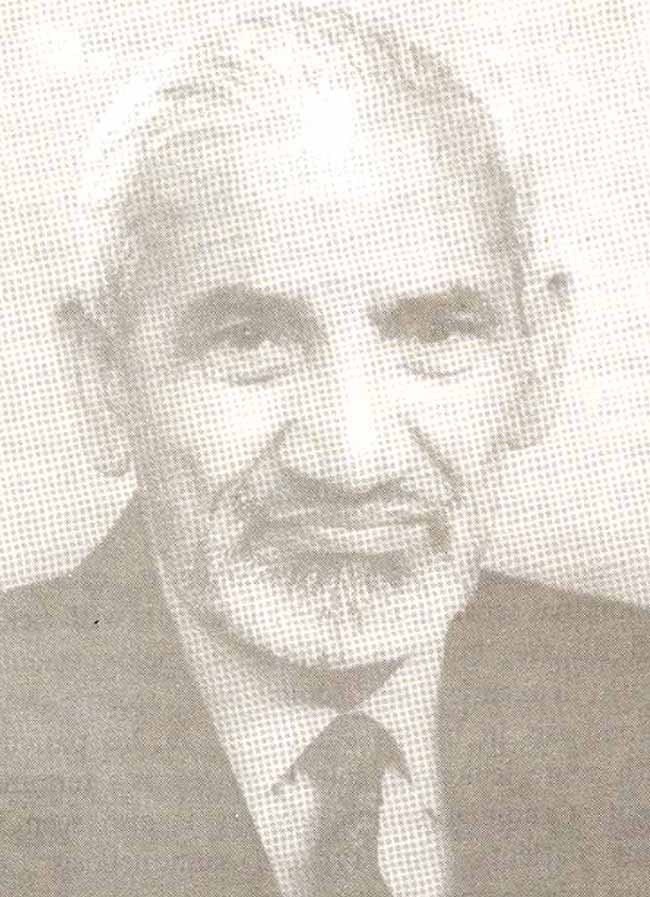
Thirteen of 51 patients with endocarditis, 25 per cent, had mitral valve prolapse, as compared with ten of the 153 control patients, 7 per cent. This result indicates a substantially higher risk of endocarditis for individuals with prolapse of the mitral valve than for those without it.
Frank .J. Milloy
Cardiac Pacing in Children. D. E. Ward, M. Signy, P. Oldershaw and others. Arch. Dis. Child, 1982, 57: 514-520.
THE EXPERIENCE of the authors with 20 patients who ranged from one to 13 years old and underwent permanent implantation of a pacemaker is reviewed - Five patients had symptomatic congenital bradycardia, and 15 had arrhythmias after surgical procedures for congenital cardiac defect. Complete atrial ventricular block after operation was the largest single indication for pacing. Lithium powered units have been used since 1975, and multiple programmable pacemakers have been used in the past two years. Seventeen of the patients had epicardial systems at the initial operation, and the rest received transvenous systems. The epicardial electrodes had the pacemakers attached and implanted in the anterior abdominal wall in the majority of patients. reoperations, five children had one reoperation,
Twelve children required a total of 23 four had two, two had three and one child had four. The most common complication was increase in stimulation threshold, occurring 23 to 34 months after implantation of electrodes and resulting in intermittent or total failure to capture. Infection required revision of the pacing system on five occasions, and lead fracture occurred on three, occasions. Pacing electrodes were changed 15 time in nine children, with a median electrode survival time of 43.5 months. Both generators were changed 16 times in ten children with an elective change for end of life undertaking seven times in five children. The mean lifetime of these units was 303± 17.6 months.
Most children who require pacemakers have congenital heart disease and require pacing after operation. Most of the problems of long term pacing in children are related to the size of the pacemaker and the unreliability of the lead system, with infection and erosion accounting for a large portion of the complications. Small, multi-programmable pacemakers and more reliable electrodes are expected to reduce the incidence of problems. The advantages and ease of transvenous pacing make this method an attractive alternative to transthoracic pacing in the large child and is a promising technique for future implantation of pacemakers in children.
Steven J. Phillips
Postoperative Long-Term Immunochemotberapy for Esophageal Carcinoma; 5 Year Survival. Yasuyuki Okudaira. Keizo Sugimachi, Kiyoshi Inokuchi and others. Jpn. J. Surg., 1982, 12: 249-256.
SINCE 1972, the authors have prescribed adjuvant combined therapy for carcinoma of the esophagus, including long term cancer immunochemotherapy after operation. As most recurrences of carcinoma of the esophagus occur within the first two years after operation, long term immunochemotherapy was continued for at least two years after operation. The regimens involved the combined use of bleomycin, which is specifically effective in instances of squamous cell carcinoma, and the oral administration of Tegafur, which has an enhancing effect when combined with irradiation; each drug has a different mechanism of action of different toxicities. As irradiation and chemotherapy serve as immunosuppressive function in patients with carcinoma of the esophagus, the authors prescribed bacillus Calmette Guerin vaccine and PS-K as immunostimulants, based upon the finding that immunologic mechanisms have a favorable effect upon the prognosis of patients with carcinoma of the esophagus.
The results of this study of 83 patients with adjuvant therapy clarified certain aspects. The postoperative long term cancer immunochem otherapy led to a 21.5 per cent increase in the five year survival rate, a rate approximately double that of the patients without this therapy. The effects of adjuvant therapy were most evident in the patients without metastasis to the lymph nodes.
R. Thomas McLaughlin
Related Articles
Journal of the Pakistan Medical Association has agreed to receive and publish manuscripts in accordance with the principles of the following committees:


